
Wednesday, 30 May 2018

Screencastify : To Show My Understanding On Film Aspects
Here is my screencastify about my understanding of the film aspects that were used in the movie, The Power Of One. We've written 4 SEXXY paragraphs. However, Mr. Aitken wanted us to do Screencastify to improve us talking and explaining what we were doing.
Saturday, 26 May 2018
Paleolithic vs. Neolithic
Paleolithic and Neolithic are parts of the stone age in our history. Paleo means old. During the Paleolithic, hominins grouped together in small societies such as bands and subsisted by gathering plants and fishing, hunting or scavenging wild animals. The Paleolithic is characterized by the use of knapped stone tools, although at the time humans also used wood and bone tools. However, Neo means new. Homo erectus found the fire and agriculture (farming, etc.) during this age.

Thursday, 24 May 2018
Testing For Hydrogen Gas
Metals and Acids Reaction
Equipment: A test tube, a boiling tube, Bunsen burner, wooden splint, a bottle of acid, a piece of metal and safety glasses.
Method:
1. Light your bunsen burner.
2. Add your sample of metal to your test tube. Add 2mL of acid.
3. Carefully invert the boiling tube above the test tube containing the metal and acid (as shown in the diagram below).

4. Hold the test tubes together for a few minutes, allowing time for the inverted boiling tube to fill with gas.
5. When you think the test tube is full, your lab partner should light a wooden splint.6. Carefully, but quickly, tilt the boiling tube full of gas upwards and insert the burning splint into the mouth of the test tube.

Observation:
The magnesium metal caused gas when Hydrochloric acid was added to it. Then the hydrogen gas from the boiling tube was set on fire with the flaming splint and the oxygen rushed inside the boiling tube which caused a loud pop. But when you've removed the boiling tube and did not insert the flaming splint quickly, it might not work. Because the oxygen escapes the tube really fast.
Magnesium metal + Hydrochloric acid (HCI) ----> Magnesium Chloride + Hydrogen gas

 |
| Metal carbonate + HCI = Fizzing and bubbles. |
 |
| Magnesium chloride + Hydrogen gas = POP! |
Tuesday, 22 May 2018
Saturday, 19 May 2018
Phone Addiction | Are Hornby High School Students Are Addicted To Their Phones?

Here in our interview, we interviewed Hornby High School students from different year levels. Most of the students that we interviewed uses social media platforms such as Instagram and Snapchat more often than any other platforms. The most common time on how many hours they use their phones was 1 - 6 hours every day. But, their ideal time on using devices was just until 1-2 hours. One of our questions was asking them that who is more addicted, kids, teens, adolescent or adults. Most of them said that teens just like them are addicted. Throughout this topic, I learned so many facts and opinions surrounding technologies which I can apply to myself.
Types Of Joints, Woods, and Finishes
In the carpentry world, there are thousands and thousands of possibilities on how you can do your work. Here are different ways and types on how to joint 2 different planks of wood.


Types Of Joints


:max_bytes(150000):strip_icc():format(webp)/ButtJoint-56aa2b603df78cf772ace0bb.jpg) |
| Basic Butt Joint |
There is no more basic wood joinery than the butt joint. A butt joint is nothing more than when one piece of wood butts into another (most often at a right angle, or square to the other board) and is fastened using mechanical fasteners. This type of joint is often used in wall framing on construction sites.
:max_bytes(150000):strip_icc():format(webp)/MiteredButtJoint-56aa2b605f9b58b7d0015338.jpg) |
| Mitered Butt Joint |
A mitered butt joint is nearly the same as a basic butt joint, except that the two boards are joined at an angle (instead of square to one another). The advantage is that the mitered butt joint will not show any end grain, and as such is a bit more aesthetically pleasing. However, the mitered butt joint isn't all that strong.
:max_bytes(150000):strip_icc():format(webp)/7DryFitJoint-56aa2bff3df78cf772acf089.jpg) |
| Tounge and Groove Joint |
When joining two boards square to one another along a long edge, one can simply butt the joint together and hold it with fasteners. However, the tongue and groove joint is much stronger and provides more adjoining surface areas, which is particularly useful if you're going to glue the joint.
:max_bytes(150000):strip_icc():format(webp)/SlidingDovetails-56aa2b705f9b58b7d00154d9.gif) |
| Sliding Dovetail |
A sliding dovetail is a versatile joint with a lot of possible uses. A good way to think of it is as a locking dado. Learn the keys to building a clean sliding dovetail joint, and when to use one.
 |
| Joining woods. |
 |
| Joining woods by Nails, Glues, Screws, and even Double Sided Tapes! |
Types Of Wood


Types Of Finishes
Exterior Finishes
| Paint Type | Comments |
|---|---|
| Conventional opaque systems - water based 100% acrylic | Best suited for use on sawn or textured durable timbers. More frequent but much simpler maintenance. One can expect 3/5 years north face before a further coat is required. More opaque finishes can last longer before recoating is required. |
| Water Repellent Preservatives | Temporary pre-treatment to prevent soiling and deterioration during construction but have limited life if not over-coated. Only use when you know what you plan to use (compatibility) to complete the painting or staining. Check with the manufacturer. |
| Wood primers | Brush application is recommended. Solvent borne – better penetration, but slower drying. Water borne - better long term flexibility, quicker over-coating and easier clean up. |
| Under coats | Good opacity and bridging properties. Increase system film build and durability. Solvent borne - best over chalky surfaces. Water borne - faster drying, better flexibility and easier clean up. |
| Finishing Coats Gloss | Alkyd or enamel paints not recommended. Water borne has slightly lower initial gloss, better gloss retention, and better film flexibility after aging. Water borne paint systems applied to primed timber using premium 100% acrylic house paint has become the only recommended option for exterior applications |
| Finishing Coats - Semi-glass | 100% acrylic house paints in both semi gloss and low sheen offer very good exterior durability. The lower the gloss the more chalking can occur. Light bright colours chalk less and it’s harder to see. |
| Finishing Coats: Flat and Low Sheen | Low sheen and flat finishes offer good exterior durability. The darker the colour the more you’re going to see the chalking of the surface. Surface chalking while it does appear as a surface change, under most circumstances does not detract from the protection offered to the substrate by the paint film. If you can’t live with a chalky surface then go for a higher initial gloss level in a bright/light colour. |
| Natural Finishes | Enhance both timber grain and texture and help maintain timber colour. Check with the manufacturer of your chosen product for application instructions and coverage recommendations. Be prepared to carry out more maintenance, choose areas that are not exposed to direct sunlight. |
| Finishes Clear | Enhances timber appearance but requires a commitment to more regular maintenance with frequent inspections. The use of clear varnishes has been advanced by UV absorbers. These absorbers however cannot absorb all the UV light, creating problems for the surface of the wood. Delimitation of the film is most often caused by failure of the wood at the coating interface. |
Paint Systems
Most pigmented paint systems for both protection and decoration consist of a three-stage process:
- Wood Primers
- Undercoats
- Finishing coats
For exterior applications 100% acrylic paints offer the best long term durability.
Wood primers
These provide good adhesion to the timber and a good foundation for subsequent coats.
They may be solvent borne, comprised of synthetic alkyd resins. Or the more recently developed water borne primers that contain an acrylic emulsion as the principal binder are alternatives that offer good adhesion to timber and greater flexibility, particularly on ageing.
The problem of tannin staining, when applied to timbers containing natural, water soluble tannins, has been largely overcome by use of fixative pigments and special emulsions developed for this purpose. Water borne primers do allow greater water vapour permeability than solvent borne. But in combination with the undercoats and finishing options they provide longer durability than a full enamel/alkyd system that hardens with age.
Wood primers used to be commonly tinted to a pink colour, a fall back to the days when white lead and red lead were mixed together in the paint. Today wood primers are lead free with many now coloured to be associated with a company’s brand.
Coloured primers help with greater apparent opacity and a contrasting colour for the next coat being applied. It avoids areas being missed during application and ensures that a sufficient second primer or undercoat is applied.
Note that timber treated with light organic solvent preservatives (LOSP) [refer AS 1604 – Specification for preservative treatment] may be delivered in a pre-primed condition. Pre-primed timber comes in many options:
- As a brand that can be recognised. Follow the painting recommendations of that brand
- Not identified. Therefore paint as if the primer is only a holding primer i.e. a full coat of premium exterior primer will be required, either alkyd or acrylic before you apply your top coat acrylic.
- Several manufacturers of weatherboard and mouldings have very specific primer applications that require fewer coats as they have already applied the primer and undercoat. Follow their recommendations, chose a premium brand of paint, follow the recommended coverage rates and don’t short cut on the number of coats.
Undercoats
hese are the bridging coats between the primer or previous paint surface and the finishing coat. They have good bridging properties across cracks, good brush-ability under most conditions, facilitate sanding, good gloss hold out which enhances the durability of the total system and have good opacity capable of substantially obscuring the background colour or colours.
Similar to primers, they can be solvent or water borne. Solvent borne undercoats are generally superior for adhesion if applied to slightly chalky or powdery surfaces and are formulated to give superior sanding properties. Acrylic undercoats are more flexible and offer better durability.
Finishing Coats
In all pigmented coating systems, (better known as paints, as distinct from stains), water borne paints have a decided advantage over solvent borne in terms of long term durability, ease of clean up of equipment and faster drying and re-coat times. One restriction, however, is that they must not be applied or allowed to dry at temperatures below 10 degrees Celsius, as film formation may not occur and the paint may become powdery.
Manufacturer’s directions should be followed at all times, particularly with regard to the system or succession of coats to be applied.
Film-forming Finishes
Gloss
These are available in a wide range of colours. The need to provide a wide colour range, while restricting stock items, has led to the use of tinting systems in preference to large numbers of ready mixed colours. Refer to the section on LRV before you chose your colour.
Water borne gloss exterior finishes are now widely used. They have superior chalk resistance; flexibility and gloss retention. They frequently provide a useful film life that is double that of the solvent systems, if they are applied to suitably prepared, primed and undercoated surfaces. When these water borne finishes are used for re-painting it should be remembered that old, embrittled alkyd or oil-based finishes will continue to harden with time and will eventually fail irrespective of the type of re-paint top coat used.
Exterior water borne finishes are generally based on emulsion resins, the most popular and proven type being pure or 100% acrylic emulsions. Don’t assume that because it’s water based it’s 100% acrylic unless it’s stated on the can.
Semi-Gloss/Satin
Satin and semi-gloss finishes, are similar in many respects to their full gloss counterparts but have had the gloss level reduced by the addition of flattening agents.
While quite suitable for exterior use, when recommended by the manufacturer, they tend to chalk earlier but do not highlight minor imperfections in the substrate as readily as gloss finishes. They are frequently available in the same extensive colour range as gloss finishes.
Flat/Matt and Low Sheen
The use of 100% Acrylic emulsions gives very good exterior exposure performance over primed timber substrates where film flexibility on ageing is important.
The term low sheen is generally used to indicate a finish with a slightly higher sheen than either flat or matt. Low sheen finishes mask minor imperfections in the substrate more satisfactorily than gloss or semi-gloss finishes. Low sheen finishes can look very nice when used on rough sawn surfaces.
Friday, 18 May 2018
Wednesday, 16 May 2018
Tuesday, 15 May 2018
Monday, 14 May 2018
Making Indicator
 |
| Here is our equipment. |
Aim: To make acid-base indicators using everyday substances.
Equipment: Turmeric and alcohol.
Method:
1. Mix 1 teaspoon turmeric in a 100mL cup of alcohol.
2. Place in a small beaker and leave to one side.
 |
| First spatula scoop of Turmeric |
 |
| First Turmeric in alcohol |
 |
| Last scoop of Turmeric. Which equals to one teaspoon of it. |
Friday, 11 May 2018
Gravity Is Important
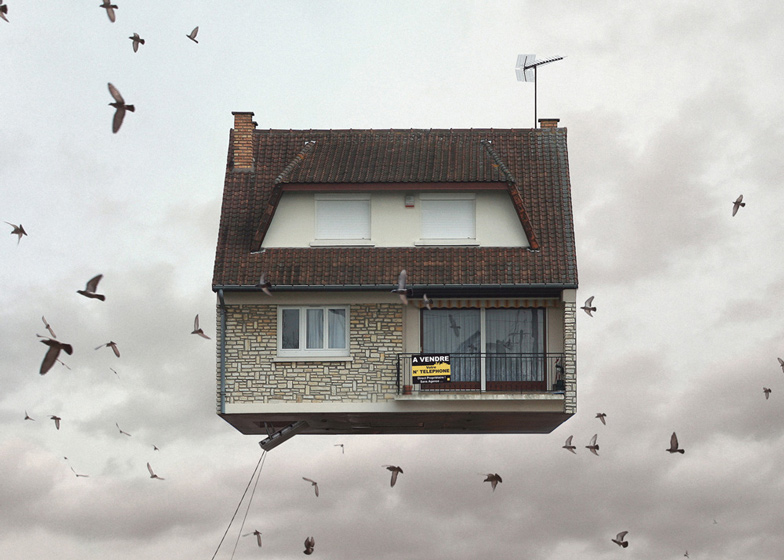 It's a bird! It's a plane! No! It's actually a floating house! Would you ever want to live in a floating house? And I've never seen this one like this before. What kind of sorcery is this? The owner is probably preparing for a zombie apocalypse that might happen soon—but hopefully not. If I would explain the house, it's in brown tone colour. It's built with bricks. It has a very big glass door on the balcony. It has a chimney and an antenna for the television signal. I'm not sure what's the actual reason for this, but I think I saw a news on the tv that the gravity here on earth is drastically going down little by little. which causes this buildings and houses to float. Gravity is the reason why we don't float in the sky, it acts like a string that holds everything down.
Thursday, 10 May 2018
Making Salts
Aim: To produce sodium chloride salt by carrying out a neutralisation reaction.
Equipment: 50 mL and 200 mL beakers, dilute HCl (hydrochloric acid), dilute NaOH (sodium hydroxide), 25 mL measuring cylinder, a glass stirring rod, spotting tile, Universal indicator solution, tripod, gauze mat, Bunsen burner, evaporating basin.
Method:
1. Using the measuring cylinder measure 10 mL of HCl and pour into your 50 mL beaker.
add dilute NaOH a few drops at a time while stirring the glass rod.
2. Every 10-15 drops stop adding the NaOH and use the glass stirring to transfer a drop of the solution to a spotting tile. Test it pH using Universal indicator.
Equipment: 50 mL and 200 mL beakers, dilute HCl (hydrochloric acid), dilute NaOH (sodium hydroxide), 25 mL measuring cylinder, a glass stirring rod, spotting tile, Universal indicator solution, tripod, gauze mat, Bunsen burner, evaporating basin.
Method:
1. Using the measuring cylinder measure 10 mL of HCl and pour into your 50 mL beaker.
add dilute NaOH a few drops at a time while stirring the glass rod.
2. Every 10-15 drops stop adding the NaOH and use the glass stirring to transfer a drop of the solution to a spotting tile. Test it pH using Universal indicator.
2. As you get closer to neutral you may need to test the solution after every drop.
3. Kepp adding NaOH and testing the solution by repeating step
4. Pour the neutral solution into an evaporating basin and evaporate the water out of the solution using the equipment set up shown above.
 |
| You can see that most of our solution was very acidic or very basic. We added 2 drops of hydrochloric acid to our very basic solution. |
 |
| We waited for a minute if it's going to change or not. |
 |
| Here is the top angle of our spotting tile with our trial and error solutions |
 |
| Since we got the neutral stage of the solution, we set up our bunsen burner with a mat on the table, a gauze mat, tripod, and an evaporating basin. We added a 100 mL of water in our beaker and waited for the water to evaporate. |
 |
| Here you can see that the water from the beaker evaporated from the beaker to the bottom part of the evaporating basin. |
Observation:
It's really hard to get the neutral stage with the solution. At the end, some little crystal salt formed.
Wednesday, 9 May 2018
Wooden Crate Storage

My goal to this wooden storage crate is to use it as a storage for my everyday uses. I have a struggle with finding stuff that I use every single day and forget where did I put it. My mum also noticed that if I used something and used it, I wouldn't put it back where I got it. That is why I really need this storage box in my bedroom and put my hair comb, bracelets, watches, phone charger, headphones, and etc.

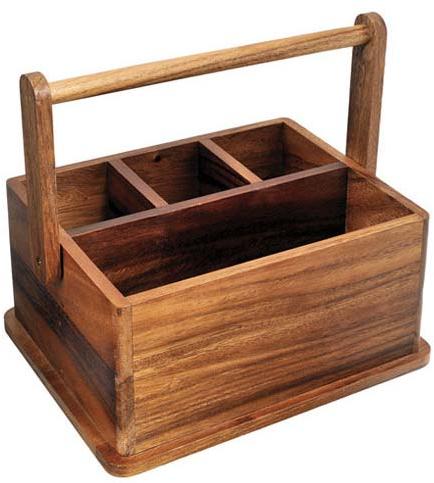
If I made my first crate early and I can do another one, I'd love to make this kind of crate for one our pastor who works as a carpenter.

Monday, 7 May 2018
Neutralisation
 |
| What happened to this was, we added too much acid in our base. When you add too much acid, it'll become acidic. In order to make it neutral, we need to add more base to the solution. |
A chemical reaction occurs when you mix together an acid and a base. The base cancels out the effect of the acid. The reaction is called a neutralisation reaction because a neutral solution is made if you add just the right amount of acid and base together.
Aim: To observe a neutralisation reaction.
Equipment: A test tube, test tube rack, L-1 Na2CO3 (sodium carbonate), 1 mol L-1 HCI (hydrochloric acid), dropper or dropper bottle, Universal indicator solution.
 |
| Why do we need to add Universal indicator in our solution? It's important to justify the solution if it's a base or acidic or even neutral. |
 |
| This is the acid. A VERY STRONG ACID. |
Method:
1. Add approximately 1-2 ml of Na2CO3 and place the tube into the test tube rack. Add 3-5 drops of Universal indicator solution.
2. Using a dropper bottle, add HCI drop by drop. Be careful because adding even a small amount of extra acid can mean you'll miss the neutralisation point.
What happened with the experiment?
- Playing with these kinds of experiments is really cool to see. I've never thought that it was actually hard to achieve the desired colour. The colour of the Universal indicator was green when we were putting it in the test tubes. If you've put so much acid (even just a little too much) it will affect the pH of the solution, just like what happened in most of our solution which is acidic (red)! However, if you've put so much base, it will also turn your solution into basic which is colour blue or purple. I learned that when you're in chemistry, you need some control on this subject OR you'll fail just being an aggressive chemist.
 |
| We succeeded once out of 6 tries to get the neutral state of the solution. |
Maori Modern Music
What style of music is this/ who performs it/ what inspired them to write it?
- I chose Stan Walker's Aotearoa. The genre of this song is Pop. Stan Walker, Ria Hall, Troy Kingi and Maisey Rika. Stan Walker was inspired to write this song because of the upcoming Maori Language 2014 that time he also said to an interview that; "we all have to connect ourselves back to the mainland where we are all from. I have never been more proud to be Māori. It doesn't matter who you are or where you've come from, to live in New Zealand, you are us and we are you. We are one!" After the success of the song, landing on the Top 3 Hall calls the result "a song to celebrate our nation, our landscape, our uniqueness, our language and our people".
What did you like about the music?
- The first time I heard it last year because it was Maori Language Week I fell in love with it, I even asked my ESOL teacher what is the title of the song but anyway, the song itself was catchy! And the way the singers harmonizes at the start was really good! I also like Stan Walker wrote the song in full Te Reo Maori.
What did you like about the video?
- To be honest, when I first saw it's music video, I was in awe! It shows the diversity in New Zealand and how these people work together to make Aotearoa unique.


- The first time I heard it last year because it was Maori Language Week I fell in love with it, I even asked my ESOL teacher what is the title of the song but anyway, the song itself was catchy! And the way the singers harmonizes at the start was really good! I also like Stan Walker wrote the song in full Te Reo Maori.
What did you like about the video?
- To be honest, when I first saw it's music video, I was in awe! It shows the diversity in New Zealand and how these people work together to make Aotearoa unique.

"No matter if you're near or far
We come from the land of God
No matter where you belong
We'll fight for your freedom"
We come from the land of God
No matter where you belong
We'll fight for your freedom"

Bonus Maori Artist
Modern Māori Quartet feat. Awhimai Fraser 'Māreikura'
I added this song because this is one of my choices. I really love how they harmonize and the acoustic/soft feel to it.
Friday, 4 May 2018
Should School Uniform/s Be Mandatory?
 I strongly agree on this topic and opinion is very clear on this one. It should be mandatory because even though families can't afford expensive school uniforms schools are always ready to help them so they can afford it, or the school can also give them used and free uniforms. School uniforms also give us the pride of the school, for like where you came from. These uniforms are also neater to look at.
It also symbolises that we are one as a community. This post is about opinion writing so this is just the opinion of mine or of what I think or feel in my perspective. So I'd like to read some of your opinions too! Just be respectful of other's opinion in the comment section.
Thursday, 3 May 2018
Technology
Firstly what is technology? For me, Technology is an upgrade for things we've used over time. Technology is also a really big help for our current works, like the computer because it helps us in every way and it makes our works easier. Our slides/presentation is all about the gadgets from the past compared to now. We also added some jokes.
Testing pH
 Aim: To test the pH of a range of household chemicals.
Equipment: A variety of household chemicals, spotting tile,
red litmus paper, blue litmus paper, Universal indicator solution, safety glasses.
Method:
1. Add a few drops of each chemical to a spot on your spotting tile. If a substance is solid or powdered
you will need to mix it with a few drops of water before testing it.
2. Test the chemicals with litmus papers.
3. Test each chemical with a few drops of Universal indicator

 If blue litmus paper turns into colour red, the solution is acidic. But if red litmus paper turns into blue, the solution is basic
 |
| Here are the observations of ours with the experiment. |

 |
| Here are the blue/red litmus paper and Universal indicator turned into. Some stayed as red and blue, then some turned blue to red, and red to blue. |

Tuesday, 1 May 2018
Matariki
Miss Beer gave us some website links to research about Matariki, and these are what I have learned and discovered with my research;

Subscribe to:
Comments (Atom)